Sleep deprivation is an increasingly common issue in modern society, especially among students, healthcare workers, and individuals balancing multiple responsibilities. Despite being an essential need for survival, sleep is often sacrificed in favor of productivity or other social activities. However, sleep is not simply a passive state of rest; it is a highly active neurophysiological process critical for brain function, cognitive performance, overall health, and more.
Sleep deprivation refers to getting less sleep than the body requires, either acutely (short-term) or chronically (long-term). According to the Cleveland Clinic, inadequate sleep can impair both physical and mental functioning, affecting mood, memory, and attention. While many people assume they can “catch up” on sleep later, the effects of sleep loss begin almost immediately and can easily accumulate over time.
How Sleep Deprivation Impacts Brain Activity
The brain relies on sleep to maintain efficient communication between neurons. When sleep is restricted, this communication becomes less organized and slower, reducing the brain’s ability to process and respond to information. One of the first areas affected is the prefrontal cortex, which controls higher-level thinking, such as decision-making, attention, and self-control (Klumpers et al.). With sleep deprivation, activity in this region decreases, making it harder to concentrate, solve problems, and stay focused (Krause et al). This is why tasks that require deep thinking or sustained attention feel significantly more difficult after poor sleep.
At the same time, the amygdala becomes more reactive. This part of the brain is responsible for processing emotions, especially fear and stress. When it becomes overactive due to sleep loss, emotional responses become exaggerated. People may feel more irritable, anxious, or overwhelmed, even in situations that would normally be manageable (Krause et al, Jahangiri FR).
The hippocampus is also heavily impacted. This region is essential for forming and storing new memories. During sleep, the brain strengthens neural connections and consolidates information learned throughout the day. Without enough sleep, this process is disrupted, making it harder to retain new information. Adeniji et al. explain that sleep deprivation interferes with synaptic plasticity, which is necessary for learning and long-term memory formation (Krause et al, Jahangiri FR et al).
Brain signaling
Sleep deprivation alters the balance of key neurotransmitters and hormones that regulate brain function. These changes contribute to many of the cognitive and emotional effects associated with sleep loss.
Adenosine is one of the primary chemicals involved. It builds up in the brain throughout the day, promoting sleepiness. Normally, sleep reduces adenosine levels, allowing the brain to reset. However, when sleep is restricted, adenosine continues to accumulate, leading to increased fatigue and reduced alertness (Klumpers et al).
Dopamine, which is associated with motivation and reward, is also affected. In the short term, the brain may increase dopamine activity to compensate for sleep loss and maintain wakefulness. Over time, dopamine signaling becomes disrupted, resulting in decreased motivation, slower thinking, and reduced cognitive performance. Cortisol, the body’s primary stress hormone, tends to rise with sleep deprivation. Elevated cortisol levels can impair memory, increase anxiety, and interfere with the brain’s ability to regulate emotions. Other neurotransmitters are also influenced by sleep loss. These chemicals are important for mood stability and attention. Imbalances can lead to symptoms such as irritability, difficulty concentrating, and decreased emotional control (Jahangiri FR).
Changes in brain activity and performance
The effects of sleep deprivation can be observed through changes in brain wave patterns. Electroencephalography (EEG) studies show that sleep-deprived individuals experience increased slow-wave activity while awake (normally associated with drowsiness). At the same time, there is a reduction in faster brain waves linked to alertness and active thinking (Jahangiri FR). These changes reflect a brain that is struggling to maintain full wakefulness. As a result, reaction times slow, attention becomes inconsistent, and errors become more frequent. Klumpers et al. also found that sleep deprivation reduces connectivity between different brain regions. This means that areas responsible for thinking, memory, and emotion are not communicating as effectively, further impairing performance (Krause et al).
One of the most dangerous consequences of this reduced brain activity is microsleeps. These are brief moments where the brain essentially shuts down for a few seconds, even if the person appears awake. Microsleep can significantly increase the risk of accidents, especially when driving or performing tasks that require constant attention (Cleveland Clinic, Jahangiri FR).
Cognitive and emotional loss
Sleep deprivation affects nearly every aspect of cognitive function. Attention and focus decline quickly, making it harder to complete tasks efficiently. Even simple activities may take longer and require more effort. Memory is also significantly impacted. Without proper sleep, the brain cannot effectively encode and store new information. This makes learning less efficient and can negatively affect academic performance (Cleveland Clinic).
Emotionally, sleep deprivation creates instability. Increased amygdala activity combined with reduced prefrontal cortex control makes it harder to regulate emotions. This can lead to mood swings, increased stress, and a higher risk of anxiety and depression (Medic et al).
Long-term sleep deprivation may also have more serious neurological consequences. Research suggests that insufficient sleep can interfere with the brain’s ability to remove waste products, including proteins associated with neurodegenerative diseases. Over time, this may increase the risk of conditions such as Alzheimer’s disease (Suni).
Why are some more affected than others
The effects of sleep deprivation are not the same for everyone. Genetic differences, lifestyle factors, and overall health all influence how the brain responds to lack of sleep.
Some individuals are more resilient and can function relatively well with limited sleep, at least temporarily. Others experience immediate declines in focus, mood, and performance. Circadian rhythms also play a role. People who naturally stay up later may struggle more when forced to follow early schedules, increasing the effects of sleep deprivation (Medic et al). Stress, diet, and screen exposure can further influence sleep quality and make the effects of sleep loss more severe. This is especially relevant for students, who often balance academic pressure with irregular sleep schedules.
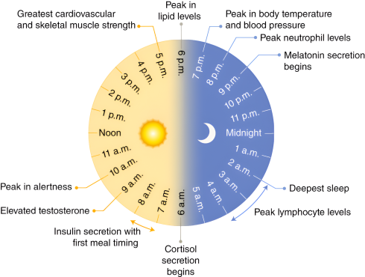
Figure 1. Circadian rhythms tell your body when to sleep and when to wake up. They work on a 24-hour cycle, with the sleep cycle being a critical component. (Sleep Solutions).
Managing and preventing sleep deprivation
Improving sleep habits is essential for maintaining brain health and cognitive performance. Most teenagers and young adults need between 8 and 10 hours of sleep per night, yet many consistently get less (Suni).
Establishing a consistent sleep schedule helps regulate the body’s internal clock. Going to bed and waking up at the same time each day improves sleep quality over time (Medic et al). Reducing screen exposure before bed is also important, as blue light can interfere with melatonin production and delay sleep onset (Jahangiri FR). Creating a comfortable sleep environment, limiting caffeine intake, and managing stress through relaxation techniques can also improve sleep quality. In cases of chronic sleep deprivation, behavioral therapy or medical support may be necessary (Medic et al).
Conclusion
Sleep deprivation has clear and measurable effects on the brain, disrupting neural communication, altering neurotransmitter balance, and impairing cognitive and emotional functioning. It affects key brain regions such as the prefrontal cortex, amygdala, and hippocampus, leading to reduced focus, memory difficulties, and increased emotional reactivity.
Although it is often underestimated, sleep is essential for maintaining optimal brain performance. Even small amounts of sleep loss can accumulate and significantly impact daily functioning. Recognizing the neurophysiological importance of sleep can encourage healthier habits and help prevent the negative consequences associated with chronic sleep deprivation.
References
Jahangiri FR. Sleep and Sleep Disorders: A Comprehensive Educational Guide to Sleep Science, Sleep Disorders, Diagnostics, and Treatment. Global Innervation LLC; 2026.
Jahangiri F. Microsleep: The Hidden Danger of Sleep Deprivation. Global Innervation Blog Published October 21, 2025. Accessed May 22, 2026.
Klumpers, Ursula M. H., et al. “Neurophysiological Effects of Sleep Deprivation in Healthy Adults, a Pilot Study.” PLoS ONE, vol. 10, no. 1, Jan. 2015, p. e0116906. https://doi.org/10.1371/journal.pone.0116906.
Krause, Adam J., et al. “The Sleep-deprived Human Brain.” Nature Reviews. Neuroscience, vol. 18, no. 7, May 2017, pp. 404–18. https://doi.org/10.1038/nrn.2017.55.
Medic, Goran, et al. “Short- and Long-term Health Consequences of Sleep Disruption.” Nature and Science of Sleep, vol. Volume 9, May 2017, pp. 151–61. https://doi.org/10.2147/nss.s134864.
Suni, Eric. “How Lack of Sleep Impacts Cognitive Performance and Focus.” Sleep Foundation, 29 July 2025, www.sleepfoundation.org/sleep-deprivation/lack-of-sleep-and-cognitive-impairment.
“Sleep Deprivation.” Cleveland Clinic, 2 June 2025, my.clevelandclinic.org/health/diseases/23970-sleep-deprivation.